
This tag was started up by Emily Davison AKA Fashioneyesta and Molly Burk; two awesome visually impaired beauty bloggers that I follow diligently on pretty much every social network imaginable and who I’d definitely recommend checking out if you get the chance!
Since their first colab YouTube videos, the #BlindGirlBeauty tag has snowballed! I recorded my version on Audioboom previously after being tagged by AsianLily19, also on Audioboom. I then tagged the girls at BlindNotBored and Beauty Within to produce their own #BlindGirlBeauty tags and they didn’t disappoint! Links to all of these #BlindGirlBeauty tags will be at the bottom of this post if you’d like to check them out.
So let’s get on with my #BlindGirlBeauty tag!
Q: What is the hardest makeup product to apply as a person who is blind or visually impaired?
A: For me this has to be fake tan. There are just so many things that could go wrong! It can look streaky, you can end up looking like a tangerine, and it can stain your hands and clothes, so it’s basically a big no-no for me. I don’t bother with sunbeds either because of the health risks involved, luckily I’m naturally pretty tanned anyway so I don’t worry about it too much.
Another product I’ve found that’s a tricky thing to master is eyeliner. Honestly I’ve never experimented with it much. The couple times I have, I’ve not been able to trust myself not to poke myself in the eyeball or something, but I do wear it if I can have someone else’s help to apply it. It’s something I’m very careful about because of the sensitivity of my eyes – if anything upsets them they get very red and watery and totally ruin my whole look! It’s definitely something I’d like to get the hang of though and I’m really excited to try out an eyeliner stencil that I’ve recently ordered and will be doing a review of on here as soon as I’ve given it a go!
Q: What is your number one tip for shopping with vision loss?
A: From my experience, I’d recommend taking someone along with you who you trust and who has the patients to help you. I’m not ashamed to admit that I could be considered a bit of a nightmare to shop with; I ask a lot of questions, I want a lot of detail and I usually want to try before I buy. So personally, having someone with me who has the patients to go through all the minor details, who knows my style and who’s willing to put the time and effort in to help me be absolutely sure of something before I splash the cash is essential. Being able to visualise what things look like and how I’d look in them is really important to me. If I can’t picture it, 99% of the time I won’t buy it. Those minor details are crucial for visualising things in my minds-eye, and since I go by memory most of the time for putting together outfits and applying makeup, knowing exactly what shoes go with that top and which shade of eyeshadow would go nice with that dress goes a long way in giving me that extra confidence boost.
Q: What is one beauty item you stay away from due to vision loss?
A: Going back to the first question, my answer to this one has to be fake tan. It’s more trouble than it’s worth! Eyeliner is difficult, but like I mentioned earlier I don’t stay away from it. I like wearing it if I have some sighted assistance for applying it. But fake tan is definitely a no-go zone!
Q: What tips would you give to a young girl struggling with vision loss who wants to get into makeup and fashion?
A: My tips would be:
1. Research – the internet, fashion and beauty magazines, friends and family, all of these hold a whole world of information. Use them! Get to know the industry and familiarise yourself with the basics.
2. Seek professional help – several high-street shops have a personal shopper service you can access. A personal shopper is someone in store who can consult you about things like styles that flatter your body shape. The consultants at the beauty counters are there to do a similar thing with makeup; they can help colour match products to your skin tone and suggest different brands that would work better for your skin type etc.
3. Experiment – I personally think of fashion and beauty as avenues to express your personality, so get creative! Try things out, find out what you like and what you don’t. See what makes you feel most comfortable/unique/confident. Ultimately it’s not about anyone else, it’s about you! So don’t be afraid to try things out until you find your personal style.
Q: How did you learn to apply makeup as someone who is blind or visually impaired?
A: When I first showed an interest in makeup, my mum made an appointment with our local beautician who spent almost two hours giving me a full makeover, teaching me about the different products, making me a list of recommendations and teaching me techniques. This is the absolute best thing she could’ve done and if you can do something similar I can’t think of a better way to get started. You’re always going to be better off learning from someone who really knows what they’re talking about, but who don’t have an agenda to sell you certain products like you might get at beauty counters. Now that I know the basics, I watch tutorial videos to get the idea of something and then usually ask a friend or my sister to go over something with me to make sure I’ve got it right. I recently learned to contour by spending time with a friend on FaceTime describing exactly where and how to apply bronzer, blush and highlighter on my face.
Q: What is one thing you think every girl should be able to do without looking?
A: I would say that lipstick is a pretty safe bet for this. You’re lips have a pretty defining shape, easy enough to follow by feel. I favour pencil lipsticks as I find them easier and more precise to apply with. As long as you kiss a tissue to get rid of any excess and make sure you haven’t mixed up your lippy with your eyeliner or something, I think anyone should be ok doing lippy without a mirror.
Q: Do you think not being able to see yourself effects your self-confidence?
A: This is a difficult question to answer because it’s hard for me to admit that it definitely used to. I’ve always been visually impaired, but I lost a lot of sight suddenly in my teens which I initially found tough to deal with. Part of this was due to frustration at not being able to judge my own appearance. Having to rely on other’s opinions of what looked good and what suited me made me feel like I wasn’t able to express my own personality and identity through beauty and fashion. I didn’t have much confidence in my own opinion, but found it difficult conceding to other people’s opinions too. I just wanted to be able to decide for myself. This obviously effected my self-confidence because I’d sometimes feel uncomfortable wearing things I didn’t really feel were very me. Thankfully with time I was able to find my own methods of approaching beauty and fashion, and now I’m a self-proclaimed shopaholic again!
Q: Name one thing you need help with when it comes to beauty and fashion?
A: The one thing I need help with is colour matching; whether that’s coordinating outfits, matching makeup to my skin tone or choosing a colour to dye my hair or paint my nails. I’m fortunate enough to have understanding of colour having grown up with more sight than I have now. So I might know enough to work out what might clash, but I still have trouble picturing things sometimes so I always get a second opinion!
Q: What is a blind girl beauty makeup or fashion essential?
A: In answer to this, I would say that a good skin care regime is essential because no amount of makeup will ever give you good skin, in fact the more makeup you use the worse your skin can get. But taking care of your skin isn’t just about cleansing, toning and moisturising, it’s drinking lots of water, eating healthily and most importantly removing your makeup before you go to sleep. That’s more of a lifestyle than a specific product, but I’d say it’s pretty essential.
Q: What is the best part about applying makeup as a person with vision loss?
A: I would say that the best thing is that, the fact that I don’t need a mirror means that I can do it anywhere. I’m a girl who really loves her bed, so on those far too frequent occasions when I’ve gotten up late and had to rush to a lecture or something, I’ve been able to sneakily finish off putting my face on at the back of the lecture theatre or in the back of a taxi. I also find that I’m able to do it quicker than my sighted friends – I don’t know if that’s because their taking more care with the detail, it’s just how it seems to work.
Q: Have you ever experienced any major makeup or fashion disasters in the past that are due to having vision loss?
A: The short answer is yes. When I first started wearing makeup, one of my teachers commented that it looked like a three-year-old had done my makeup when I went into school one day with waaaaaay too much sparkly blue eyeshadow on and made me take it off. More recently, I was on work placement and had done my makeup in a bit of a rush one morning after getting up late (I told you I like my bed!) When I got into the office, one of my co-workers discreetly told me that I had big black streaks across my cheeks. What I’m guessing happened is that I must’ve managed to smudge my mascara in my rush. I had to run off to the toilets to try to get it off, but it knocked my confidence for the whole day because I couldn’t be 100% sure I’d gotten it all off. Nothing says professional like messy war paint eh?
Q: Do you ever have people commenting that ‘you don’t look blind/visually impaired?’
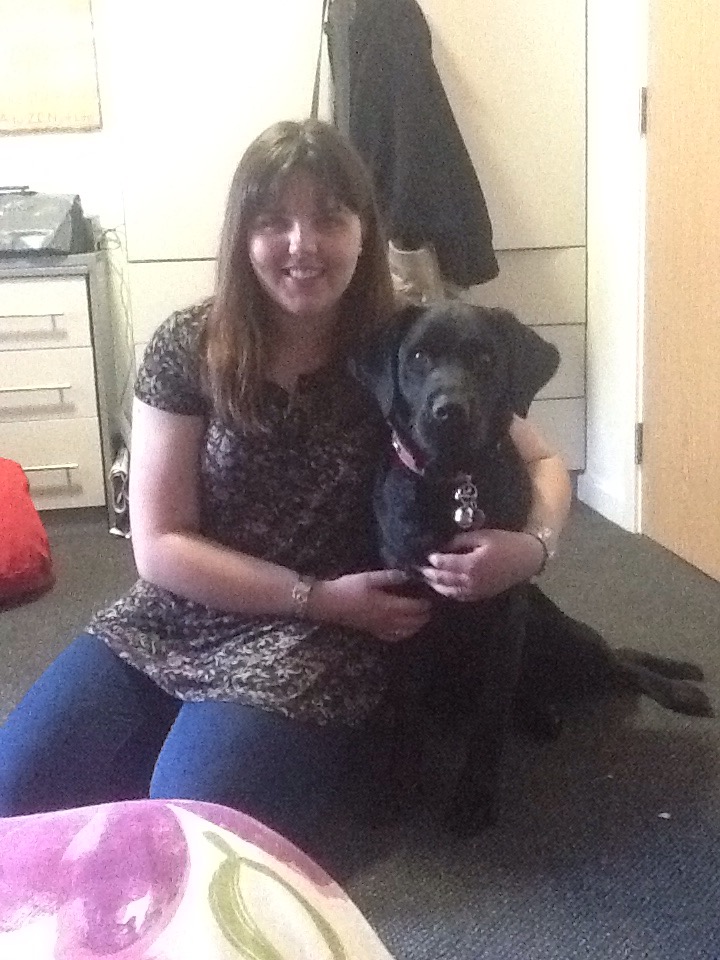
A: Again, my short answer to this is a very big YES! I’m always being asked if I am my guide dog’s trainer, because she couldn’t possibly be my working dog right? I’m not sure whether this is due to me not looking blind or lack of knowledge about guide dogs. Though I suppose it’s true that I don’t look like the traditional stereotype of a guide dog user; I don’t wear the dark glasses, I don’t carry the cane, and shock horror I’m not on my pension!
I know that I also confuse people because I have a lot of habits that may make it seem like I can see more than I can. For example, I usually look at my phone when I’m using it, even though I’m actually listening to the speech software and haven’t been able to read the screen for years and in fact my screen is usually turned off to save battery! I also try to make a point of looking directly at people when I speak to them which some people find confusing. This is something I actively practiced when I was younger for the exact purpose of not looking obviously blind. My visual impairment has nothing to do with my actual eyes, so there is nothing physically wrong with my actual eyeballs that might alert you to the fact that they don’t work brilliantly. I suppose I could forgive people for not knowing that I’m VI just on that basis, but the guide dog by my side should be a pretty big give away to be honest!
Q: Do you use any pieces of assistive technology or apps to help you when putting outfits together or doing your makeup?
A: Basically, not really. I have gadgets I could use like a colour detector which announces the colour of something when it’s pressed to a material, but it’s not always that accurate. Apps like Taptapsee, a camera app that announces the object you’ve taken a picture of, can be more accurate but isn’t 100% reliable. Sometimes I’ll use my Pen Friend to label different products by stamping them with a sticker which I can record a personalised message onto that is played back when touched by the Pen Friend. But honestly I use my memory for most things. I have a sort of mental catalogue of all the clothes in my wardrobe and can visualise an item when I recognize it by touch. I use this visual bank, along with all the information I gathered when buying that item to coordinate outfits and imagine what it’d look like. I always get a second opinion the first time I wear an outfit, but I’m usually ok at guessing what will go with what. There are loads of different things out there though, so if I ever needed anything I’d know where to look.
What I would love is an app that could do the final check of my makeup for me. That would be fulfil all my #BlindGirlBeauty dreams!
That concludes my #BlindGirlBeauty tag! As promised, below are the links I mentioned above so please check them out if you can and get involved by posting your own #BlindGirlBeauty tag!
#BlindGirlBeauty tags
My tag on Audioboom Part 1: https://audioboom.com/boos/3262336-blindgirlbeauty-tag-part1
Part 2: https://audioboom.com/boos/3262338-blindgirlbeauty-tag-part2?playlist_direction=forward
Fashioneyesta: https://www.youtube.com/watch?v=hM24BgH1B2k
Molly Burke: https://www.youtube.com/watch?v=5_67UjeUfUM
AsianLily19: https://audioboom.com/boos/3260863-blindgirlbeauty
BlindNotBored: https://www.youtube.com/watch?v=8XtprcGwfN8
Beauty Within: https://wakeupandcthemakeup.wordpress.com/2015/08/01/116/
 See My Way